Aluminum Fence Finials – Types, Sizes and Uses
What Is a Fence Finial, and Why Does It Matter?
A finial is a decorative cap fitted onto the top of a fence upright to close off the exposed end. Without a cap, an open tube can collect rainwater, leading to corrosion and other damage over time. A finial helps protect the tube while also giving the fence line a finished and deliberate look instead of a row of bare pipe ends. On chain link fencing, the finial or cap is one of the few parts of the system visible above the mesh, so it serves two purposes: protection and appearance.
Aluminum as a Finial Material
Aluminum is a useful material for outdoor fence hardware. It does not rust like untreated steel, is lightweight enough to install and remove easily, and works well with powder coated finishes. A black powder coated aluminum finial can provide both durability and a clean appearance when matched with black fence mesh and supports.
For a chain link fence that is already built from galvanized steel, pairing it with an aluminum finial means the cap itself is less likely to become a corrosion concern. This can be useful in humid climates or areas where the fence is exposed to sprinklers or standing water.
The trade off is that aluminum is softer than steel, so it may not be the right choice for a finial that will receive repeated physical impact, such as one fitted to a gate support that is frequently exposed to vehicles or heavy equipment. For a standard boundary or perimeter fence, this is rarely an issue.
Finials and Caps on a Chain Link Fence: What's Actually Different
Not every cap on a chain link fence is the same part, even though they can look similar in a product listing. It helps to know which one you actually need before ordering.
Aluminum Finial, 5/8 Inch, Black Powder Coated
This is the pointed or capped top piece that sits on a fence upright, closing the tube and adding a finished appearance. It is sized according to the tube's outer diameter, not its wall thickness, so getting the correct measurement is important for a secure fit.
Aluminum Dome Cap, 2-3/8 Inch
A dome cap has a rounded, low profile shape rather than a pointed design. Dome caps are commonly used on larger terminal, corner, or gate supports where a simple and unobtrusive top is preferred over a decorative point.
Both types perform the basic job of covering and protecting the tube opening, but the shape should match the overall design of the fence. Using pointed finials on some sections and dome caps on others can make the fence look inconsistent once installation is complete.
The Rest of the Chain Link Fitting System
A finial or cap rarely works in isolation. The other fittings in a chain link fence hold the mesh and rails securely to the framework. These fittings are commonly available in galvanized and black powder coated finishes.
Top Rail Sleeves
A top rail a sleeve, such as a 1-5/8 inch sleeve, joins two lengths of top rail end to end. This allows the horizontal rail running along the top of the fence to form one continuous line instead of having unsupported joints.
Rail Ends
A rail end, available in sizes such as 1-3/8 inch and 1-5/8 inch, connects the top rail to a terminal, corner, or gate support rather than to another length of rail. This fitting helps transfer the rail load into the framework and keeps the connection secure.
End Rail Clamps
An end rail clamp, such as a 1-3/8 inch by 1-3/8 inch fitting, connects the rail to the framework using nuts and bolts. It is useful where the fence line ends rather than continuing to another section.
Tension Bands and Brace Bands
A tension band holds the tension wire and mesh securely against a terminal support and helps keep the chain link mesh properly tensioned.
A brace band performs a different function. It helps anchor a diagonal brace rail between a line support and a terminal support, providing additional stability when the mesh is tensioned.
Gate Clips
Gate clips are small fasteners used to attach chain link mesh to a gate frame rather than directly to a support. They are sized according to the gate frame tube, so checking the frame diameter is important before ordering.
Galvanized vs. Black Powder Coated: Choosing a Finish
Every fitting in a chain link fence system, including finials, caps, rail ends, clamps, tension bands, brace bands, and gate clips, can be available in different finishes. The most common choices are galvanized and black powder coated.
Galvanized
Galvanized steel has a zinc coating that provides protection against corrosion. It is a practical choice for utility, agricultural, commercial, and residential fencing where appearance is less important than durability and corrosion resistance.
Black Powder Coated
Black powder coating is often selected for appearance as well as additional surface protection. It works especially well when the fence mesh and framework are already black coated.
The practical rule is simple: choose one finish and use it consistently across the fence fittings. Using galvanized rail ends, tension bands, and brace bands with a black finial can make the finished fence look mismatched even when each individual component performs properly.
Sizing: Measure the Tube, Not the Listing
Chain link fittings are sold according to the outer diameter of the pipe they fit onto. Common sizes for posts and rails range from approximately 1-3/8 inch to 2-3/8 inch.
Before ordering a finial, cap, rail end, or clamp, measure the actual pipe or rail rather than assuming a standard size. Pipes from different manufacturers can vary slightly, which may result in a fitting that is either too loose or too tight.
If you are replacing fittings on an existing fence, it is also useful to measure more than one upright. Older fence installations can sometimes contain pipes from different suppliers or installation periods.
Installation Notes
Finials and dome caps typically slide over the top of the upright and are held in place by a snug fit. In many applications, additional fasteners are not required.
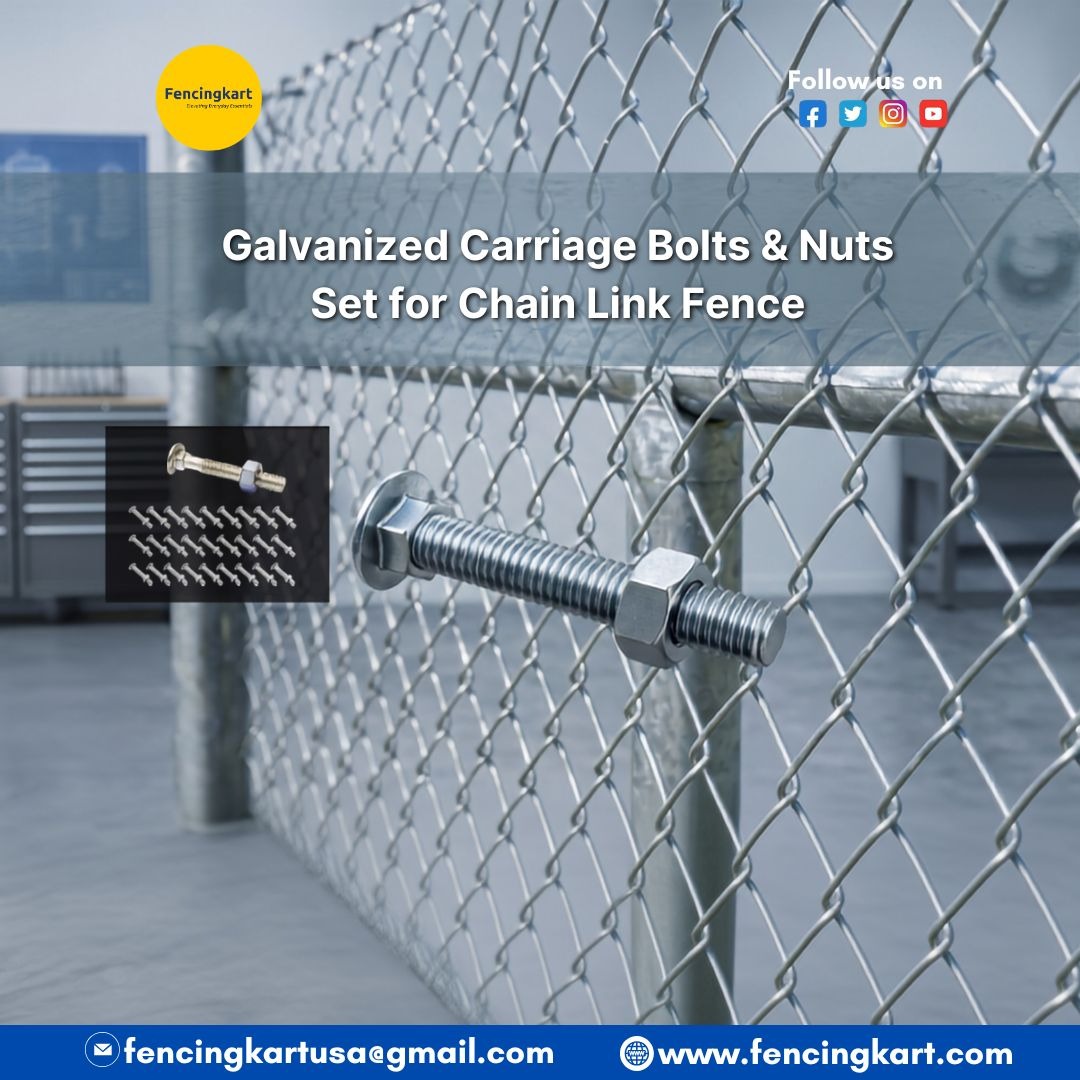
Rail ends, end rail clamps, tension bands, and brace bands are secured using their respective nuts and bolts. Using the correct hardware helps prevent loose or rattling fittings after installation.
When installing chain link fittings, work along the fence line systematically. Band and bolt fittings should be tightened after the mesh has been properly positioned and tensioned. Tightening them too early can make it harder to achieve the correct final tension.
How to Choose the Right Parts
1. Measure the actual pipe and rail diameters before ordering any fittings.
2. Choose one finish, such as galvanized or black powder coated, and use it consistently across the fence.
3. Match each fitting to its specific purpose. Use rail ends and end rail clamps for rail connections, tension bands and brace bands for mesh support and framework stability, and gate clips for attaching mesh to a gate frame.
4. Consider purchasing a few extra hardware fittings, especially tension bands and brace bands. Having spare parts can be useful when repairing or modifying a fence later.
Final Thoughts
A finial or cap is a small component, but on a chain link fence it is also one of the most visible parts, sitting above the mesh line where its shape and finish are easy to notice.
Choosing the right size, shape, and finish for your aluminum fence finials and matching them with the rail ends, clamps, tension bands, and brace bands used throughout the fence can make the entire installation look more complete and consistent.
Whether you are installing a new fence or replacing existing hardware, measuring the tube correctly and choosing compatible fittings will help you achieve a cleaner installation and better long term performance.
Visit FencingKart.com to browse the full range of aluminum fence finials, dome caps, rail ends, clamps, tension bands, brace bands, and other chain link fencing hardware. You can also shop directly on Amazon for selected fencing fittings and accessories.
Read More: Best Heavy-Duty Dog Kennel Clamps: Easy Steel Hardware
Visit us at : www.fencingkart.com,
E-mail : fencingkartchd@gmail.com
WhatsApp :
+17788181919 for support or shop us directly on.
