Carriage Bolts & Nuts for Chain Link Fence
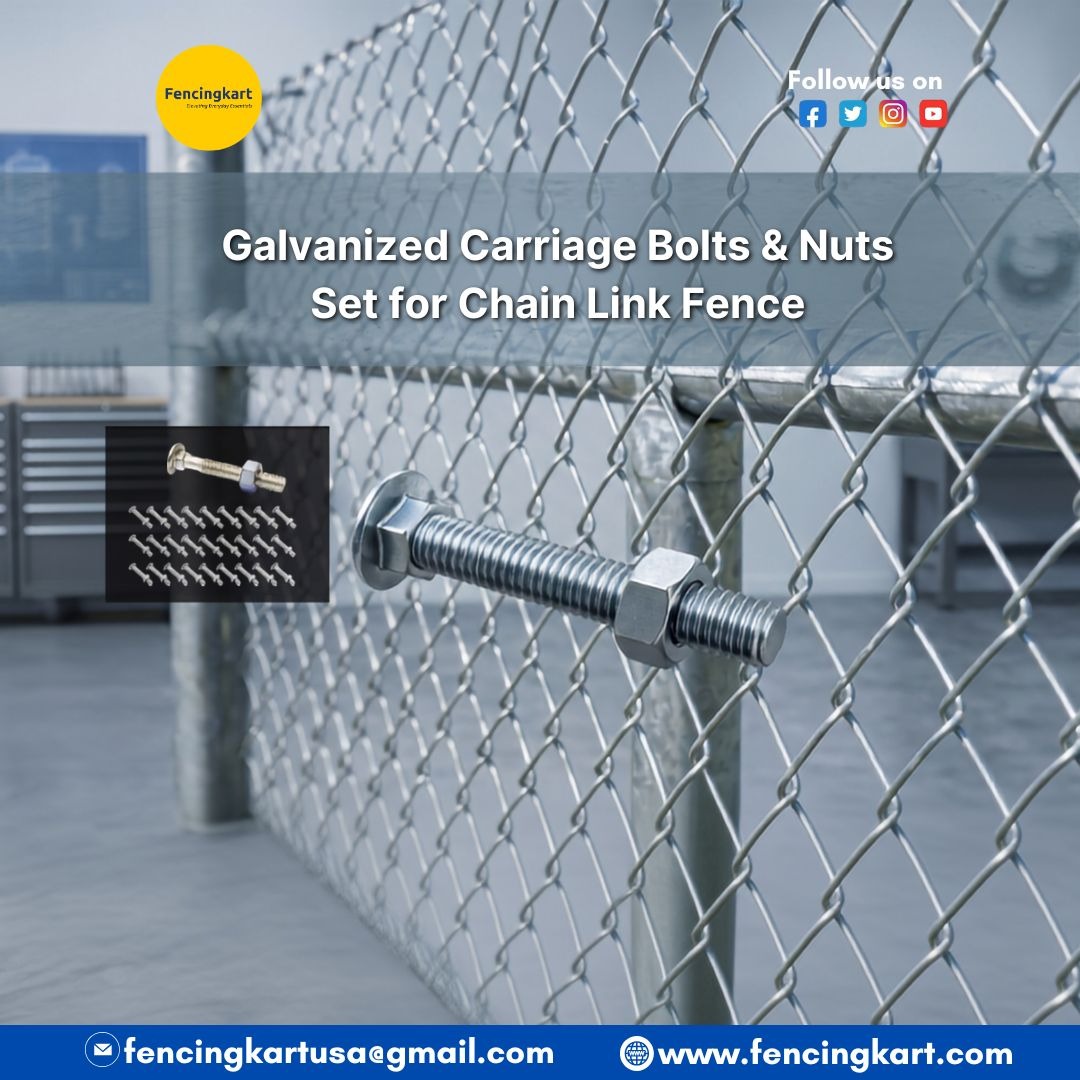
If you're installing or repairing a chain link fence, the hardware you choose matters just as much as the fencing material itself. Carriage bolts and nuts for chain link fence are the small but critical fasteners that hold everything securely in place, from rails to gates to post brackets. Get the wrong size or material, and you're looking at rust, wobbling sections, and a structure that fails way before its time.
This guide covers everything you need to know what these bolts do, the different sizes available, why galvanized alloy steel is the right material choice, and how to pick the correct set for your project. Whether you're a homeowner doing a weekend install or a contractor managing multiple sites, this is the information you need before you buy. Browse the full chain link fence hardware range at Fencing Kart before you start.
What Are Carriage Bolts for Chain Link Fences?
Carriage bolts are fasteners specifically designed to create a secure, tamper-resistant connection. Unlike standard hex bolts, carriage bolts have a smooth, domed head and a square neck just below it. When you drive the bolt through a pre-drilled hole, that square section bites into the material and prevents the bolt from spinning while you tighten the nut on the other side.
For chain link fence applications, these bolt-and-nut sets are used to connect rails to posts, attach gate hinges and latches, secure rail end cups, and fasten tension bands and brace bands. Because the structure is permanently outdoors and exposed to wind, rain, and temperature changes, the quality of these fasteners determines how long your entire installation holds up.
Why Galvanized Alloy Steel Is the Only Smart Choice for Outdoor Fencing Hardware
Let's be direct about materials. If you're shopping for chain link carriage bolts and someone is offering plain steel at a bargain price, walk away. Plain steel without a protective coating will begin rusting within months when exposed to outdoor conditions.
Galvanized hardware goes through a zinc-coating process that creates a physical and chemical barrier against moisture and oxygen, the two things that cause rust. The galvanization process is why galvanized carriage bolts and nuts for chain link fences are considered the industry standard for outdoor installations across the United States.
The sets available from Fencing Kart are made from alloy steel with a premium galvanized finish. Alloy steel brings higher tensile strength compared to mild steel, so these bolts won't deform or shear under the tension loads that outdoor hardware regularly experiences, especially in windy conditions or when gates are being used heavily.
Key Benefits of Galvanized Alloy Steel Bolts briefly
• Superior rust resistance from the zinc galvanization process
• Higher tensile strength from alloy steel construction
• Long service life even in wet, humid, or coastal climates
• Maintains structural integrity under regular mechanical stress
• Consistent appearance that doesn't stain or discolor surrounding materials
Understanding the Size Options: Which Carriage Bolt Do You Actually Need?
One of the most common mistakes when buying fencing hardware is grabbing the wrong bolt size. The three sizes in this product line 3/8" x 2-1/2", 5/16" x 1-1/2", and 5/16" x 1-1/4"; each serve specific connection types. You can view all available sizes on the FencingKart products page . Here's what you need to know about each one.
5/16" x 1-1/2" - The General-Purpose Chain Link Fastener
The 5/16" x 1-1/2" carriage bolt is the most used fastener in standard chain link fence installations. The 5/16" thread diameter matches the pre-drilled holes in most American-standard components — including tension bands, brace bands, and rail end cups.
The 1-1/2" length gives enough shaft to pass through a typical component, accommodate the nut, and still leave a few threads visible after tightening the correct installation standard. The thread specification is 5/16"-18, the standard coarse-thread pitch for this diameter in the US measurement system.
This is the right size for most residential and commercial installations where you're connecting bands and cups to posts or rails. If you're unsure which size to start with for your fencing project, this is it.
5/16" x 1-1/4" - For Thinner Material Connections
The 5/16" x 1-1/4" version uses the same thread diameter and pitch as the 1-1/2", but with a shorter shaft. This makes it the right choice when connecting components with thinner combined material thickness for example, attaching a tie wire clip to a relatively thin rail, or securing a thinner tension band.
Using a bolt that's too long a common mistake. Excess threading sticking out past the nut can catch on clothing, create a snagging hazard, or simply look unprofessional. The 1-1/4" length is there for exactly those applications where the 1-1/2" would be unnecessarily long.
3/8" x 2-1/2" - Heavy-Duty Connections and Gate Hardware
The 3/8" x 2-1/2" bolt is the heavy hitter in this lineup. The larger 3/8" diameter means higher shear strength, and the longer 2-1/2" shaft accommodates connections were multiple layers of material stack together. This is the size you'll want for gate hinge assemblies, heavy tension hardware on commercial fencing, and any application where the connection needs to handle significant mechanical load.
Gates are the highest-stress point in any fence system. They open and close repeatedly, carry their own weight, and often deal with wind resistance. Using undersized hardware on gate hinges is a leading cause of gate failures. The 3/8" x 2-1/2" bolt provides the strength margin that heavy-use applications require.
Why 25-Piece Sets Make Sense for Real Projects
These carriage bolts are sold in 25-piece sets, not individually and that's the practical choice for anyone doing real installation work. Here's why.
A single standard section typically requires multiple bolts. A 100-foot residential chain link fence installation could easily need 30 to 60 bolts depending on how many brace bands, tension bands, and rail connections are involved. Buying in sets means you have enough to complete the job without multiple hardware store runs.
It also makes sense for repairs. If you're replacing damaged fence sections, having extra bolts on hand means you can complete the work the same day. Fence repairs often happen under pressure — weather damage, vehicle impacts, or security concerns that need immediate attention. A 25-piece set sitting in your garage means you're prepared.
Contractors and maintenance crews will want to keep multiple sets on hand across different sizes. Having a matching bolt-and-nut set also ensures the thread pitch is always compatible mixing fasteners from different sources can sometimes lead to cross-threading issues.
American Standards Compatibility - Why It Matters
Hardware sold for chain link fence installations in the United States follows specific dimensional standards. The hole sizes in tension bands, brace bands, and rail end cups are manufactured to accept standard American bolt diameters. These carriage bolt sets are designed to match those specifications precisely.
The 5/16"-18 thread specification (5/16" diameter, 18 threads per inch) is the standard coarse-thread designation in the Unified National Thread Standard used across the United States. You won't have thread mismatch issues when pairing these with standard American hex nuts or fence hardware.
Installing Carriage Bolts on Chain Link Fence: What to Know
Installing carriage bolts is straightforward, but there are a few things worth knowing before you start.
Align the hole first. Bolts go in from the front or outside-facing side of the connection. The square shoulder should sit fully into the hole as you push the bolt through.
Use a flat washer when needed. For connections where the nut bears directly on a thin material surface, a flat washer distributes the load and prevents the nut from pulling through under stress.
Tighten to snug, not over-torqued. Fence hardware doesn't need extreme torque. Tighten until the connection is firm, and the material is compressed together, then stop. Over-tightening can deform to thinner components.
Check for thread exposure. After tightening, you should see 2-3 threads past the nut. If there's significantly more, the bolt is too long. If there's none, it's too short and the connection is not fully engaged.
Inspect during maintenance. Even galvanized hardware benefits from a yearly check. Look for white powder (zinc oxidation) or surface rust around the nut and replace any fasteners showing significant corrosion.
Frequently Asked Questions
What size carriage bolt do I need for a standard chain link fence?
For most standard residential components — tension bands, brace bands, rail end cups — the 5/16" x 1-1/2" carriage bolt is the most widely used size. If you're working on gate hardware or heavy-duty commercial applications, the 3/8" x 2-1/2" is the appropriate choice. For thinner connections, the 5/16" x 1-1/4" works well.
Are galvanized bolts strong enough for outdoor chain link fences?
Yes. Galvanized alloy steel carriage bolts provide both the strength required for structural fence connections and the corrosion resistance needed for long-term outdoor use. Galvanization does not reduce the structural integrity of the bolt — it adds a protective zinc layer on top of the strong alloy steel core.
What is 5/16"-18 thread specification?
5/16"-18 means the bolt has a 5/16-inch diameter and 18 threads per inch. This is the standard coarse-thread designation for this bolt size in the United States (Unified National Coarse thread standard). All 5/16" bolts in this product line use this thread spec, ensuring they mate properly with standard American hex nuts and threaded fence hardware.
Can I use these bolts for fence gates?
For gate hinge connections, the 3/8" x 2-1/2" bolt is the recommended choice. Gates experience more mechanical stress than standard fence sections because of their weight and repeated opening/closing cycles. The larger diameter and longer shaft of the 3/8" bolt provides the structural strength that gate hardware requires.
How many bolts do I need for a fence installation?
It varies depending on length, number of posts, and hardware configuration, but a general estimate for a standard residential installation is 4 to 6 bolts per post (for tension bands and brace bands) plus additional bolts for rail connections and gate hardware. A 25-piece set is often sufficient for shorter runs or repair work. For longer projects, ordering multiple sets is advisable.
Will these bolts work with fence hardware from other brands?
Yes — as long as the other hardware follows American standard sizing. These bolts are designed to match American standards, so they'll be compatible with any US-specification components using standard hole diameters. The 5/16"-18 thread is a universal standard in the US, so the nuts work with any standard American hex nuts.
About Fencing Kart — Dedicated Chain Link Fence Hardware
Fencing Kart specializes in chain link fence components, hardware, and accessories. The focus is specifically on fencing products — not a general hardware store that happens to carry some bolts alongside everything else. That specialization matters when you're looking for hardware specifically engineered to American fencing standards.
The galvanized carriage bolt sets available through Fencing Kart carry a premium manufacturer grade rating, meaning they've been held to quality standards that commodity hardware often doesn't meet. For an installation you expect to last 10, 15, or 20 years, the hardware quality you choose at the start directly determines whether that expectation is realistic.
Visit fencingkart.com to browse the full range of bolt sets and other fencing hardware. You can also shop directly on Amazon for fast delivery.
A chain link fence is a significant investment, and the carriage bolts and nuts holding that structure together determine whether it stays tight, secure, and rust-free over the years. Galvanized alloy steel carriage bolts for chain link fence installations are not a place to cut corners — the right hardware, in the right size, installed correctly, protects your whole investment.
Whether you're choosing between the 5/16" x 1-1/4", the 5/16" x 1-1/2", or the heavier-duty 3/8" x 2-1/2" bolt set, pick based on your actual connection requirements — not just what's cheapest or most convenient. The 25-piece sets give you enough to handle most residential fencing projects or repairs in one go.
Read More: Brace Bands for Chain Link Fence
Visit us at : www.fencingkart.com,
E-mail : fencingkartchd@gmail.com
WhatsApp : +17788181919 for support or shop us directly on.
