Chain Link Fence Top Rail: A Complete Guide to Types, Sizes and Fittings
If you have ever walked past a chain link fence and noticed it sagging in the middle or leaning slightly to one side, chances are the problem starts at the top. The top rail is the unsung hero of a chain link fence. It runs horizontally along the top of the fence line, holding everything together, keeping the mesh taut, and giving the whole structure a clean, finished look. Yet most homeowners and even a few contractors overlook it until something goes wrong. In this guide, we will walk through what a top rail actually does, the common sizes you will come across, and the small but important fittings, such as sleeves, rail ends and ring caps, that make a top rail system work the way it should.
What Is a Chain Link Fence Top Rail and Why Does It Matter
A chain link fence top rail is the horizontal pipe that runs along the top edge of the fence, connecting one post to the next. It is not just a decorative touch. Its main job is structural. Without a proper top rail, the chain link fabric has nothing to hold it in place at the upper edge, which means the mesh can bow outward, sag under its own weight, or loosen over time, especially in areas with strong wind or heavy use.
A well-installed top rail keeps the fence line straight, adds rigidity to the entire structure, and reduces the strain on individual posts. It also plays a quiet but important role in the overall lifespan of the fence. A fence that flexes and shifts constantly wears out its fittings faster than one that stays firm and aligned. So even though it can look like a minor detail, a solid top rail often decides whether a fence holds up for ten years or starts falling apart within the first year or so.
Common Top Rail Sizes You Should Know
Top rails are not a one-size-fits-all product. The diameter of the rail needs to match the rest of your fence hardware, including the posts, rail ends and any caps or fittings you plan to use. Some of the most commonly used sizes in residential and light commercial chain link fencing are 1-3/8 inch and 1-5/8 inch outer diameter pipes, though larger sizes such as 1-7/8 inch are also used, especially where the fence needs to support a gate post or a heavier gauge fabric.
Size accuracy plays a bigger role in this than most people expect. If a rail end or sleeve does not line up exactly with the pipe diameter, it will not sit correctly, and that small mismatch can slowly turn into a loose connection. Before buying any fittings, it always helps to measure your existing top rail or check your fence plan so everything lines up on the first try.
Top Rail Sleeves: Joining Sections Without Weak Points
Most residential fences are longer than a single length of top rail pipe, which means multiple sections need to be joined end to end. This is where a top rail sleeve comes in. A sleeve slides over the ends of two adjoining rail sections, holding them in a straight, continuous line without any wobble or gap.
FencingKart's Top Rail Sleeve is built for a 1-5/8 inch OD pipe and comes in a pack of four pieces, which is usually enough to join several sections along an average residential fence line. It is available in two finishes depending on the look and durability you are going for. The black coated version offers a sleek, modern finish that blends well with black chain link fabric, while the galvanized silver version leans into a more traditional, industrial appearance and pairs naturally with standard galvanized fencing.
Both versions share the same core construction. They are made from steel with a smooth, neat edge finish that avoids the rough, unfinished look some cheaper fittings have. The black coated option adds a layer of corrosion resistance on top of that, which is worth considering if your fence is in a coastal area or somewhere with high humidity. Since these sleeves are designed to match standard American manufacturing dimensions, they should fit most 1-5/8 inch top rail pipes without any modification.
Rail Ends: Connecting the Top Rail to Terminal Posts
While sleeves join rail to rail, a rail end does a different job. It connects the top rail to a terminal post, meaning the corner, end or gate posts of your fence, rather than the line posts in between. This connection point takes on a fair amount of stress, especially at corners and gate openings where the fence experiences the most pulling and pushing force.
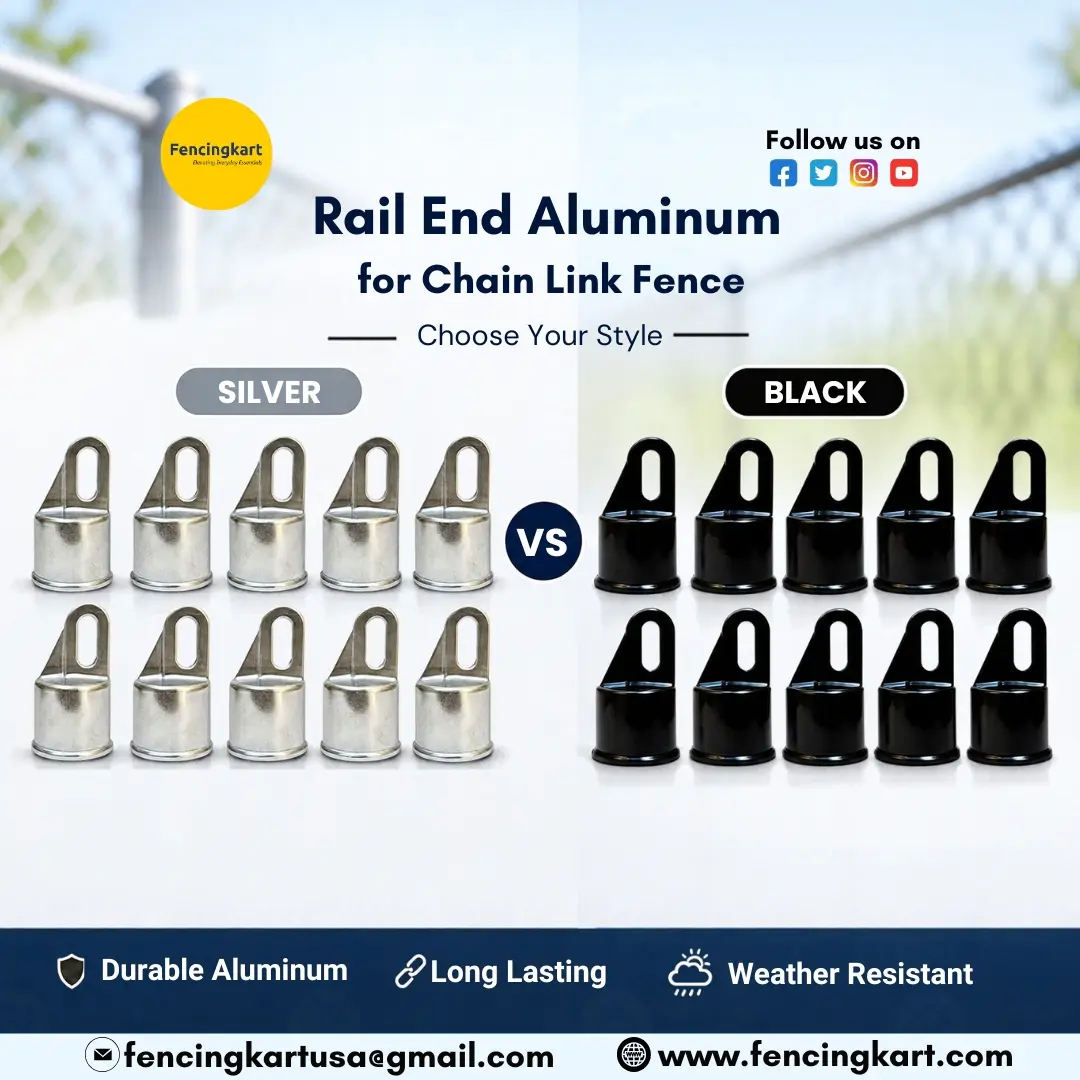
FencingKart offers rail ends in two sizes to match different fence setups. The Rail End Aluminum 1-3/8 inch comes in a pack of ten pieces with a silver galvanized aluminum finish, making it a good fit for standard residential fences using the smaller rail diameter. For fences built with the larger 1-5/8 inch OD pipe, there is a matching Rail End Aluminum option finished in black coating, also sold in a pack of ten.
Both options are made from galvanized aluminum, a material chosen specifically because it holds up well against acid, alkali and salt spray exposure, which are common culprits behind rusted or corroded fence hardware. The black coated 1-5/8 inch version adds a powder coated layer on top of the aluminum base, giving it extra resistance to weathering while keeping the smooth, neat edge finish that makes for an easier, cleaner installation. Since both are designed to match standard American fitment specifications, they should slide onto their respective pipe sizes without needing any extra adjustment.
Aluminium Eye Top Rail Ring Caps: The Overlooked Connector
There is one more fitting that often gets missed when people plan out their chain link fence hardware, and that is the eye top rail ring cap. Unlike a rail end, which connects the rail to a terminal post, an eye ring cap is designed to sit on top of a line post while allowing the top rail to pass through it. This keeps the rail properly elevated and aligned along the entire fence run, not just at the ends.
FencingKart's Aluminium Eye Top Rail Ring Cap is built to fit a 1-7/8 inch gate post alongside a 1-5/8 inch top rail, which is a fairly standard pairing in many chain link fence layouts. It comes in a five-pack and is available in both black and silver finishes, so it can be matched to whichever look the rest of your fence is going for. Made from aluminum, these caps are built to handle prolonged exposure to heat, rain, snow and general moisture without breaking down, which makes them a low-maintenance choice for outdoor use.
Installation is meant to be straightforward, since the caps are designed to fit directly onto standard post and rail sizes without special tools. Beyond function, they also give the top of the fence a cleaner, more finished appearance by covering the post opening and keeping the rail visually aligned along the post line.
Black Coated vs Galvanized: Which Finish Should You Choose
Almost every fitting mentioned above comes in two finish choices, black coated or galvanized silver, and the decision often comes down to a mix of appearance and environment. Galvanized silver fittings have a long track record in fencing because the zinc coating naturally resists rust and corrosion, and they tend to blend in with classic silver chain link fabric. Black coated or black powder coated fittings, on the other hand, have grown popular for a more modern, discreet look, especially when paired with black vinyl coated chain link fencing.
From a durability standpoint, both finishes are built to last outdoors, but the black powder coating adds an extra protective layer that some homeowners prefer in humid or coastal climates. Ultimately, the choice is less about which one is stronger and more about which finish matches the rest of your fence and the look you are going for.
Tips for Installing and Maintaining Your Top Rail System
A few small habits go a long way in keeping a chain link fence top rail system working properly for years. Always measure your pipe diameter before ordering sleeves, rail ends or ring caps, since even a small mismatch can leave a loose, rattling connection. Tighten all fittings firmly during installation, but avoid over-tightening aluminum parts, as they can be more prone to stress cracks than steel.
It also helps to do a quick seasonal check, especially after storms or heavy winds, to make sure sleeves have not shifted and rail ends are still snug against the terminal posts. Catching a loose fitting early is a lot easier than fixing a sagging fence line later. Finally, if you are replacing an old, rusted rail system, consider upgrading to a coated finish, since the added corrosion resistance can meaningfully extend the life of your fence.
Final Thoughts
The top rail might not be the most talked about part of a chain link fence, but it is one of the parts doing the most work behind the scenes. Choosing the right size, pairing it with proper sleeves, rail ends and ring caps, and picking a finish that suits your climate and style can make a noticeable difference in how long your fence stays straight, secure and good looking. Whether you are building a new fence or repairing an old one, getting these small fittings right is what turns a basic chain link fence into a long-lasting, low-maintenance boundary you will not have to think about for years.
Visit FencingKart.com to browse the full range of kennel panel clip bands, gate clips, chain link fence fittings, tension bands, brace bands, rail ends, and other fencing hardware. You can also shop directly on Amazon for selected fencing fittings and accessories.
Read More: Carriage Bolts & Nuts for Chain Link Fence
Visit us at : www.fencingkart.com,
E-mail : fencingkartchd@gmail.com
WhatsApp :
+17788181919 for support or shop us directly on.
